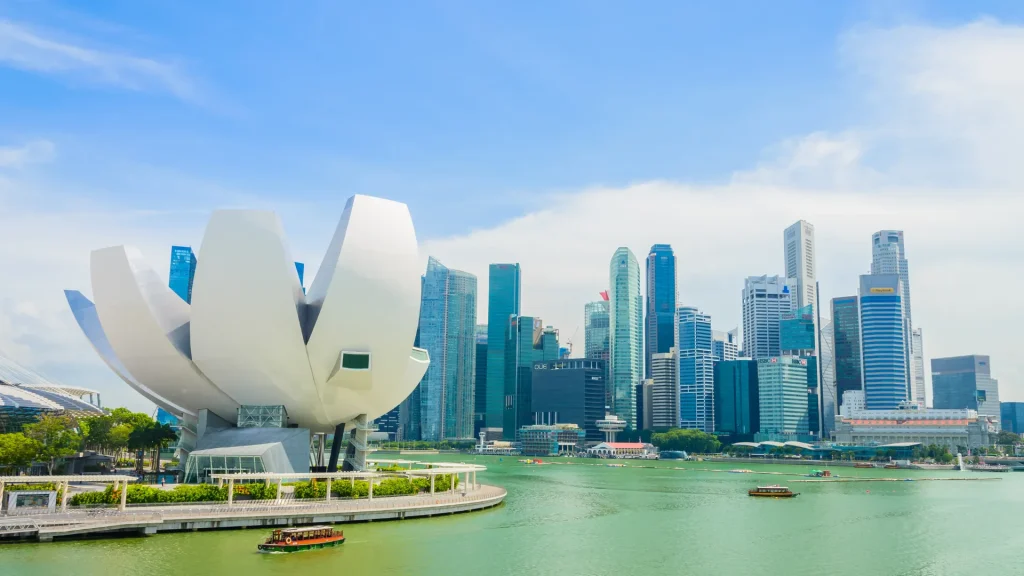
Singapore has expanded its tax framework to strengthen support for businesses pursuing voluntary climate commitments.
From Year of Assessment (YA) 2026, eligible businesses can claim a 100% tax deduction on qualifying expenditure for Renewable Energy Certificates (RECs) and carbon credits surrendered or retired to meet sustainability commitments.
Introduced under Section 14ZJ of the Income Tax Act 1947, this development extends tax support beyond regulatory compliance, recognising qualifying voluntary climate expenditure within Singapore’s corporate tax framework.
Key takeaways
- From YA 2026, businesses can claim a 100% tax deduction on qualifying RECs and carbon credits surrendered or retired to meet sustainability commitments.
- Eligible RECs must be associated with renewable electricity supplied to Singapore. Overseas RECs do not automatically qualify.
- Deductible expenditure may include certificate acquisition costs and qualifying transaction-related fees.
- The deduction is claimed in the YA corresponding to when eligible certificates or credits are surrendered or retired, subject to the applicable expenditure requirements.
Singapore Extends Tax Support Beyond Regulatory Compliance
Previously, deductions for Green Certificates and Green Credits (GCCs) were limited to expenditure on certificates surrendered or retired to meet statutory or regulatory requirements.
The expanded framework now includes qualifying expenditure for voluntary sustainability commitments.
This provides greater financial support for businesses pursuing climate goals beyond regulatory obligations.
What does a 100% Tax Deduction Mean?
A 100% tax deduction allows businesses to deduct the full amount of qualifying expenditure from their taxable income. It does not mean the government reimburses the purchase cost. Actual tax savings depend on the company’s tax position.
Which RECs and Carbon Credits Qualify?
The Inland Revenue Authority of Singapore (IRAS) sets out the eligibility requirements for Green Certificates and Green Credits under Section 14ZJ and its accompanying rules.
Renewable Energy Certificates (RECs)
To qualify, a REC must represent the environmental attributes of renewable electricity supplied to Singapore in accordance with the Electricity Act 2001.
This includes eligible renewable electricity generated domestically and qualifying cross-border electricity imports.
Do Overseas RECs Qualify?
Not automatically. An internationally recognised REC does not necessarily meet Singapore’s tax requirements.
The associated renewable electricity must be supplied to Singapore under the applicable rules. RECs from overseas projects without such electricity supply do not qualify.
This distinction is particularly relevant to businesses procuring renewable electricity across APAC.
Related: Reducing Scope 2 Emissions in APAC: Strategic Insights on Renewable Energy Certificates (RECs)
Carbon Credits
Qualifying carbon credits include certificates representing greenhouse gas emission reductions, removals or avoidance.
Certain emissions-related rights and regulatory instruments also fall within the prescribed definitions.
Eligibility depends on whether the instruments meet IRAS’s requirements.
What Expenditure Is Deductible, and When Can Businesses Claim?
Qualifying expenditure may include:
- Acquisition costs of eligible RECs and carbon credits.
- Fees paid to transaction intermediaries.
- Qualifying exchange and trading service fees.
- Relevant professional service costs associated with eligible purchases.
The deduction is calculated using actual qualifying expenditure, rather than the certificates’ market value at the time of surrender or retirement.
When can businesses claim the deduction?
Businesses can claim the deduction in the YA relating to the basis period in which eligible certificates or credits are surrendered or retired. Purchasing them alone is insufficient.
The qualifying expenditure must also have been incurred in the basis period relating to YA 2026 or a subsequent YA.
What This Means for Corporate Climate Procurement
Singapore’s expanded tax treatment strengthens the financial case for voluntary climate action. Qualifying expenditure can now benefit from tax deductions even when the underlying commitment is not legally required.
For businesses, this also calls for careful procurement decisions. Certificate eligibility, qualifying costs and retirement timing can affect whether a purchase meets the requirements for the deduction.
Beyond the immediate tax benefits, the expanded framework reinforces Singapore’s support for businesses integrating voluntary climate commitments into their long-term sustainability strategies.
Supporting Singapore’s Corporate Climate Ambitions
Saxon Renewables welcomes Singapore’s continued efforts to advance voluntary corporate climate action.
As Asia’s Climate Solutions Partner, we bring regional market expertise to REC procurement and carbon credit solutions across APAC. We support businesses in navigating market requirements and implementing credible climate strategies.
Interested in exploring renewable energy certificates or carbon credit solutions for your organisation?
References
- Inland Revenue Authority of Singapore (IRAS): Green Certificates and Green Credits
- Income Tax Act 1947, Section 14ZJ
- Income Tax (Deduction for Expenditure on Green Certificates and Green Credits) Rules 2026, S 767/2026
Last updated: November 2026